Books I Finished in 2023

Happy Solstice! Here are all the books I finished in 2023. I started many more, but I don’t make it a point to finish every book I start.

I didn’t have a high number as my goal for books read this year because I thought I would be starting grad school in August, so I definitely surpassed it. (Now I am starting school in January!)

1. Equal Rites by Terry Pratchett

Terry Pratchett is one of my favorite authors of all time. I read Going Postal and Monstrous Regiment as a kid. I loved the characters in Equal Rites, but didn’t love the ending. It was absolutely still worth reading. They can’t all be hits!

2. So You Want To Be A Wizard by Diane Duane

I cannot say enough good, admiring things about Diane Duane. She was my favorite author growing up and now, in my thirties, I am re-reading her Young Wizards series and making an effort to finish the whole thing– it’s about ten books. Her sense of wonder about the world is unparalleled, and the series doesn’t treat adulthood as a loss of that wonder, which I appreciate.

(Her tumblr presence is also stellar.)

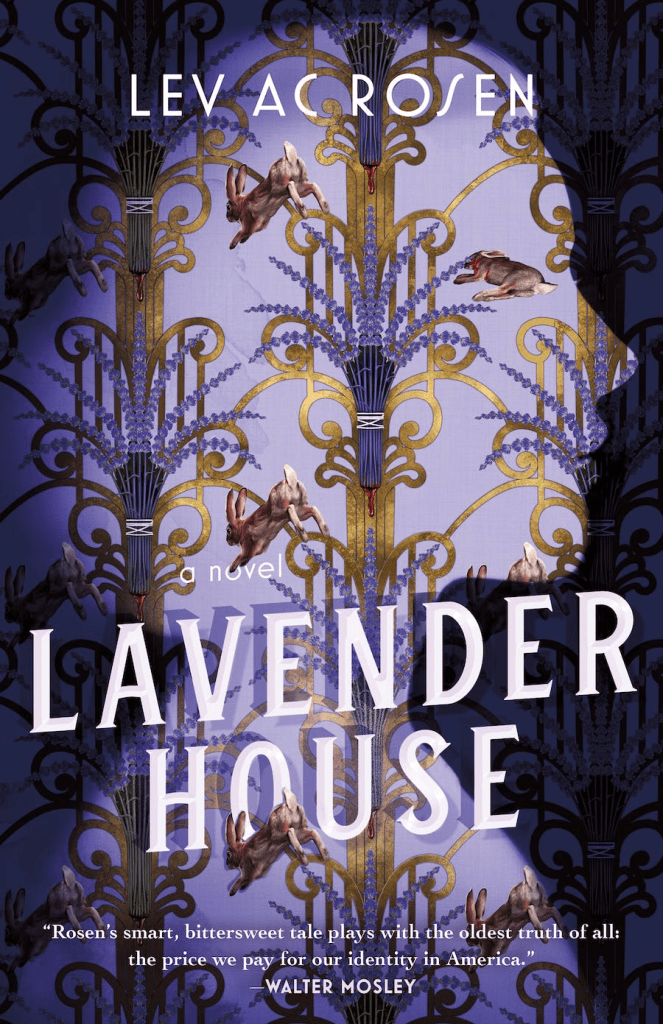
3. Lavender House by Lev AC Rosen

Read my review here.

4. Your Art Will Save Your Life by Beth Pickens

This book was not great. It was marketed as a book about creativity, but it was extremely focused on surviving and coping with the Trump presidency. Even the sections that strayed into other topics did not feel super practical.

5. The Apocalypse of Elena Mendoza by Shaun David Hutchinson

I love YA and I love magical realism so I had to try out some Shaun David Hutchinson. The characters and the magical realism elements were great, but it definitely didn’t need to be as long as it was. In its defense, I did keep reading to the end just to find out what was going to happen. If you don’t mind Hamlet-esque waffling, this could be a great read for you!

6. Transgender History by Susan Stryker

This book was superbly engaging and definitely worth taking notes on.

The main issue that I had with it is that it didn’t focus very much on the AIDS epidemic. I understand that queer authors might not want to make their work hinge on that continuing tragedy, but it almost felt like the subject was skipped.

7. Variations on Your Body by Avery Alder

This very short book might have changed the way I see the world. It bills itself as a “pervasive gaming” experience, which is like playing pretend for people who have a hard time without structure. Highly recommend.

Cons: I don’t really like birds.

8. Camp Damascus by Chuck Tingle

Read my review here.

9. Hell Followed With Us by Andrew Joseph White

Read my review here.

Bonus: TBR!

  • Our Share of Night by Mariana Enriquez.
  • Legendborn by Tracy Deonn
  • The Left-Handed Booksellers of London by Garth Nix.
  • All Out (Collection).
  • How to be Eaten by Maria Adelmann.
  • Fledgling by Octavia Butler.
  • Our Shadows Have Claws (Collection).
  • Transmogrify (Collection).

Hell Followed With Us by Andrew Joseph White Review

In the first few pages, we learn that Benji is a transgender 16 year old boy who is on the run from a Christian death cult who unleashed a plague upon the world in order to bring about Armageddon. They want him, and him specifically. In the rest of the book, we watch him struggle in various ways against the cult and the plague-ridden world they have wrought, with some brave and battle-hardened fellow-queers at his side. Also, one of the characters is unabashedly autistic.

I was entranced by this book’s cover as soon as it showed up to my library, and then drawn in further by the blurb. Once I finally checked it out, it was better than I could have imagined.

This book is definitely YA, and while it may be a little juvenile for adult readers, it is great fun for people of any age. The ending makes any understandable gripe you could have with the rest of it worth it, in my opinion.

Trigger warnings: the entire work is rife with body horror. I did not find it particularly grotesque but may have struggled more if it was a movie instead of a book. There’s also interpersonal violence, arson, transphobia, religious abuse, eco-fascism, self-harm, and vomit throughout. I found it delightfully dark instead of unpleasantly grueling, but YMMV. It is also full of hope and solidarity. If you think you can handle these subjects, when they are directed towards a YA audience, I highly recommend picking it up.

I give it four stars for its quality and five stars for my enjoyment of it.

How to Create a Reading Journal You’ll Actually Use

Reading journals have become big business recently, in large part because of a growing movement that promotes mindfulness in a hectic world. Whether you read paper books, ebooks, or audiobooks, it can be extremely valuable to track your reading. However, it can be hard to get started and even more challenging to keep with it.

Here are some of my thoughts on reading journals.

Reasons to track your reading:

  • you want to remember what you read.
  • you want to get more thoughtful about books.
  • you need a place to take notes from the things you read.
  • you want to make sure you’re reading a variety of genres.
  • you want to connect with other readers by writing reviews on GoodReads, StoryGraph, or a blog.
  • you want to read a certain number of books in a certain time frame.
  • you’re curious about what books you gravitate towards.
  • you’re curious about what tropes you like.
  • you want to compile a list of your favorites.

Got more reasons to keep a reading journal? Let us know in the comments below!

Pre-Made or Bullet Journal Style?

There are a ton of pre-made reading journals out there, to the point that, despite oodles of reviews online, you may find it overwhelming to try to pick one. In that case, I recommend making your own!

The rest of this article will deal primary with make-your-own reading journals, with a heavy influence from the Bullet Journal Method.

Think: what is the purpose of your reading journal?

The main purpose of my reading journal is to remember what I read, because I have memory issues. I often feel like I don’t know what I did with my time, including what I read, so I keep track. I also like to give myself credit for all the reading that I do before I decide a book is not for me, so I even keep track of books I started but didn’t finish!

Yours might be different, and become a place to list all the exciting things you might read next! Or maybe you’re goal-oriented and want to see how many books you can finish in a year! Or maybe it’s primarily an art journal! The possibilities are endless.

My point is, it’s important to choose a primary reason for your reading journal so that you know what to include or which one to buy, if you’re taking that route.

Here are some reading journal page ideas, from my own reading journal:

  • A title page. I recommend that this have your name and contact info in case it’s lost, as well as the dates the journal covers. That way, in the future, you can easily find what you read by time period.
  • A Table of Contents like in the Bullet Journal Method. I only include pages I will want to reference frequently, but you may choose to include everything.
  • A running list of the books you have finished. For me, this is a simple numbered list with the book’s title, author, and the date I finished it. I make a new list for each year.
  • A reading log. This is different than the books you’ve finished, because it’s arranged by date and chronicles books you may not have finished. I don’t always finish the books I’ve started, and I still want credit for them, dammit! My reading log is a chart with the date, title, author, and a column where I can draw a star if I finished it that day. I do this particular chart with the notebook turned landscape so I have more room to write the title.
  • A library books tracker. For me, this is another chart with the title, author, three columns for me to write the due date, and a column to check off if I’ve returned it. In my library system, we can renew books twice, so I might need all three spaces.
  • A To Be Read, or TBR. Obviously! Make sure you write down both title and author.
  • A review template. Mine includes title, author, publication date, star rating out of five like on Goodreads, genre, diverse voices, and who I would recommend this to. If you like, you can also include the format (like ebook or audiobook). The rest of the page is divided into two columns: things I liked and things I didn’t like. I make a review page for each book I start and write in it as I go, but other people may choose to only do review pages for books that they have finished.
  • Review pages. My review pages are rewritten from the review template, and contain a big star if I finished it.
  • Book notes. You might be reading fiction or nonfiction– I know I read both– and either way, you might want to write notes. I often write chapter summaries for fiction. For me, these are separate from the review pages.
  • Quote pages. Sometimes a quote from fiction or nonfiction will really strike me, so I write it on its own page. Make it artsy if you like!
  • Vocabulary. If you’re an enthusiastic reader, you might not often come across words you don’t know the definition of, but when you do, you should definitely write it down and look it up! Camp Damascus stumped me with “gelid” and I have never really understood what “philology” is. If you keep a running list, you will avoid being stumped in the future and learn something new!
  • Recommendations you’ve gotten and who recommended them. Sometimes, the person doing the recommending matters a lot! You may have reviewers whose tastes match up with yours, or friends whose opinions you trust! I have a special page for books I was recommended through my single month of Tailored Book Recommendations. (I was so curious I had to give it a try, and I learned a lot about my own preferences just from answering the questions that the service gives you!)
  • A list of your favorite books of all time. For a challenge, try to pare it down as much as possible!
  • Least favorite book of all time and the book that challenged you the most. Mine are, respectively, Ethan Frome and Rosencrantz and Guildenstern are Dead.
  • DNF (or Did Not Finish) page, with a list of your DNFs and why you stopped reading.
  • Series lists, to keep track of each book in a series.
  • Finally, an index. Mine is in the back of the book and records titles as well as authors (by last name) and the pages on which they appear. I allotted about 10 lines per letter and just fill them in as I go.

Do you keep a reading journal? Have I missed anything? Let me know in the comments below!

Review: Camp Damascus by Chuck Tingle

Title: Camp Damascus

Author: Chuck Tingle

Published: 2023

Summary: Rose is a normal, Christian high school senior who begins seeing demons. That’s about all I can tell you without giving anything away. This is popular erotica author Chuck Tingle’s first foray into horror, as well as traditional publishing, and it packs a punch. Trigger warning for gay conversion camps and bugs.

What I Liked:

  • Rose is neurodivergent, probably autistic, and that was honestly my favorite aspect of the book. Much is made of her curiosity and how it is a guiding light in her life, and it’s what propels the book forward. She’s brave, yes, and stubborn, but she won’t rest until she understands what is happening to her. Seeing curiosity touted as a virtue, in a way that was so consistent throughout the book, was very important to me and cemented this as a 5-star read.
  • The ending was absolutely stellar. Very cathartic and definitely on the spectrum of happily ever after. You are rooting for the characters through the whole novel and, in the end, they find out what they can accomplish both separately and together.

What I Didn’t Like:

  • I felt that the pacing was off. Though the book takes place over the course of weeks, readers have no time to recover from one action-packed sequence before they are thrust into another one. Rose even spends some time in the hospital and yet we, as readers, are not given a pause in the excitement.

Rating: 5/5. The breakneck pacing did not dampen my enjoyment of this novel, which covered many subjects that are dear to my heart in a way that was as kick-ass as Chuck Tingle could make it.

Review: Lavender House

Title: Lavender House

Author: Lev AC Rosen

Published: 2022

Summary: The year is 1952, and Andy is a recently disgraced investigator on the San Francisco police force. Despite the rollicking local queer scene, Andy has never been able to be out and proud, and instead used his insider knowledge to avoid the clubs getting busted by his colleagues. His secret finally catches up to him, so he decides to get drunk enough to throw himself into the bay when he is approached by a woman named Pearl. Pearl knows his secret and wants to hire him to investigate the death of her wife, Irene.

What I Liked:

  • When talking about this book, I described it as a “gay murder mystery.” Several times, I got asked if the detective was gay or if the suspects were gay. The answer is: both. Almost every single person in the entire book is queer, which is the opposite of tokenism and I am here for it.
  • The ending was absolutely perfect. I won’t spoil it, but I felt it wrapped up the themes in a satisfying way.
  • I am against what I call “copaganda,” or the insistence on painting the police as heroes in fiction. Despite the main character being a former police detective, he is regularly forced to confront the evils of the system he upheld, and I really appreciated that.

What I Didn’t Like:

  • The only thing I didn’t like was the inclusion of some hate-crimey violence. It was very explicit and felt unnecessary, a harsh reality that intruded on an otherwise relatively cozy story.

Rating: 4/5.

I’m not rating it a full 5 stars because it isn’t one of my favorite books of all time, but it is extremely solid, and queer people who like murder mysteries better than I do should definitely pick it up.

Review: The Witch’s Path by Thorn Mooney

This is by far the best book on witchcraft I have ever read.

I am one of those people that will research witchcraft endlessly. This is part of the fun for me, but it’s also not actually practicing the “craft” part of witchcraft.

Here, Thorn Mooney writes a book for ALL witches, no matter their level. In each chapter, she writes about a foundational part of witchcraft. Not in a beginner-textbook way, but in a way that will reignite your spark for that particular aspect. The chapters are sacred space, devotion, ritual/magic, personal practice, and community.

The best part is the practical exercises at the end of each chapter. They come in sets of four, aligned with the four elements. Air is for beginner witches, fire is for witches that need something quick, water is for witches looking to deepen their practice, and earth is for witches that feel like they’ve already tried everything.

I highly recommend doing the exercises— I did some highlighting in my ebook and went back to them after I was finished reading. Some of them are long, 30-day “challenges,” so you may not want to wait to do them before you finish the book.

Note: the author is Wiccan, but she makes sure that the information in her book is applicable to witches of all paths!

5/5.

Review: The PTSD Workbook by Mary Beth Williams

The PTSD Workbook by Mary Beth Williams (second edition) is an interactive journey through trauma recovery backed up by science and personal wisdom. It largely conforms to other works about trauma I have read, especially Judith Herman’s ideas about the three phases of trauma recovery.

I was super excited to dive in and do all of the activities. However, the workbook quickly lost my trust, though I continued to read through it in the hopes of gleaning some sort of wisdom. This is a very good workbook that I believe could help many people– with one small revision.

On page 25, there is an exercise about “My Trauma-Related Beliefs.” Readers are invited to think and write about the subconscious beliefs that trauma has given them and explore how true they are. The first example is “I believe I am a victim and that my troubles are the fault of others.” Readers are invited to think about whether that belief has determined their course of action in the past, with the assumption that they will work on revising it once they have had it pointed out. In this example, it’s a failure of personal responsibility to say that all of your troubles are someone else’s fault, even if people never deserve to be traumatized.

The second example is where I have an issue. The belief reads: “I believe that I can’t do things– that I am physically or emotionally incapable of doing them.” To give Williams the benefit of the doubt, I can see how learned helplessness could be a real problem that some people have and need to learn how to deal with. However, it continues in parentheses: “By the way, be aware that ‘I can’t’ generally means ‘I won’t’ or ‘I don’t want to.’ ‘I can’t‘ is really a statement of refusal.”

What?!

Psychological disabilities are real, just like physical ones. If someone can’t walk, they can’t walk. If someone can’t grocery shop, for example, they can’t grocery shop.

Let’s take the grocery shopping example further. Obviously, the person in question with a psychological disability (like PTSD) COULD go through the physical motions of going to the grocery store. Some people in wheelchairs CAN walk. However, the health consequences associated with completing that action will often make it not worth it. A wheelchair user, who can walk under very specific circumstances and/or for short times, would still suffer if you took their wheelchair away. They may be in severe pain or fall and injure themselves. Likewise, someone who “can’t” go to the grocery store may know that they will have a panic attack or exhaust themselves if they do, which are both examples of significant suffering that makes the activity not worthwhile. Just because they are technically capable of doing something that someone without a disability could do, it doesn’t mean that it would be good or healthy for them to do it.

You may have heard of “spoons,” or “spoon theory.” It’s not a metaphor that I love, since I prefer more common-sense units like “batteries,” but it’s worth mentioning since it’s spawned an entire subculture. “Spoons” are the measurement of energy or ability a physically or psychologically disabled person has. While they’re not usually easily measurable in exact numbers, a “spoonie” who uses the spoon theory to talk about their illness may start out the day with a finite number of “spoons.” Each activity, depending on how challenging it is to complete, depletes (or sometimes replenishes) spoons. For example, taking a shower might be lots of spoons for someone, while a healthy person would barely notice the amount of energy it takes. A spoonie who is completely exhausted and needs to rest is said to be “out of spoons.” Pushing past this limit, while sometimes possible, tends to result in longer recovery times and lots of suffering.

Part of the implication in the workbook was that people often decide they “can’t” do things just because they don’t want to do them. I can understand why people feel this to be true. There are a few reasons for this.

One, people with disabilities often have to choose carefully what activities have room in their lives due to limited ability or spoons. They may prioritize beloved hobbies or time with family and friends over, for example, doing the dishes, because they can’t do both. This can look like they’re making excuses because they don’t want to do something. In reality, they are trying to take care of themselves by making sure their lives include meaningful activities.

Secondly, unpleasant activities often take more spoons just BECAUSE they are unpleasant. It’s like feeling sleepy during and/or after a boring meeting– the properties of the event or activity make it harder to deal with. It’s not laziness or oppositionality or babying ourselves– it’s a genuine result of symptoms that everyone with a disability understands, but those who don’t have one might not.

When dealing with disabled people (either others or yourself) please understand that disability really does mean that there are some things a person can’t do.

Note: there is a lot of ableism surrounding physical disabilities as well as psychological ones. It just isn’t true that physical disabilities are as widely understood as many psychological disability activists believe. I don’t mean to imply that anything else is the case through my comparisons, but I do feel that often physical disabilities are easier for people to imagine and empathize with than psychological ones.

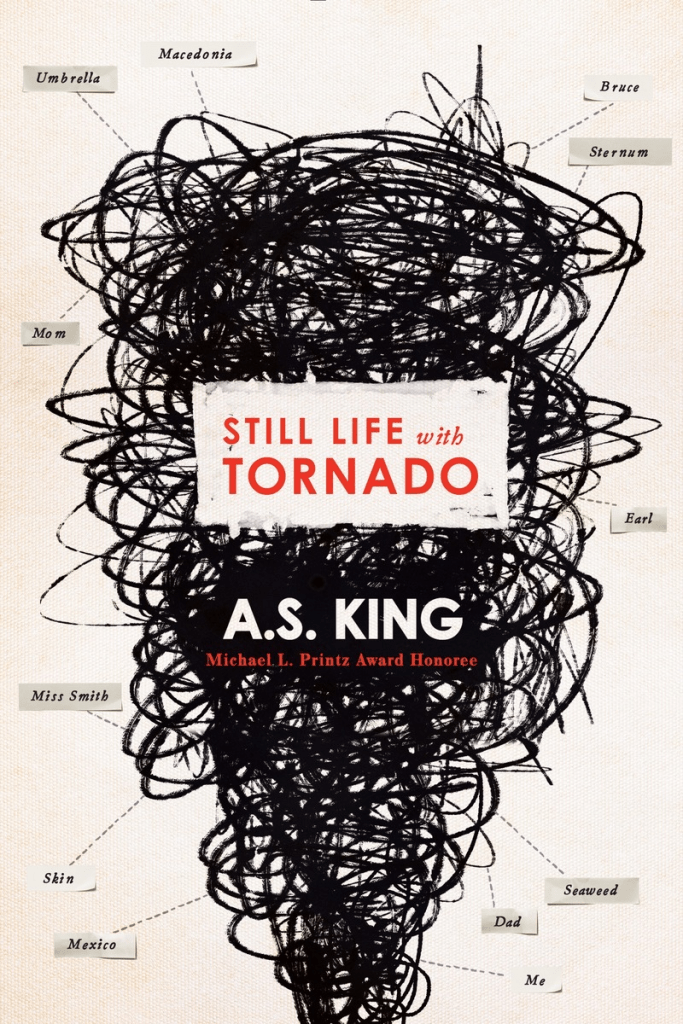
Review: Still Life With Tornado by A.S. King

“I tell the truth slowly. I think that’s how the truth shows up sometimes.”

For much of this book, we don’t know what’s wrong with the main character Sarah. That’s because Sarah can’t even bear to think about it herself. After all, she tells the truth slowly, but she gets there. This is the main source of tension and intrigue for the reader. Not a lot happens in this book except for the character’s internal shifts and the artistry in how they are conveyed to the reader. If that sounds boring, then this is not the book for you. If you can appreciate introspection in your fiction, however, this is a masterpiece of YA.

I connected wholeheartedly with this book, and found exceptional catharsis in it, despite how different the facts of 16-year-old Sarah’s life are from mine. For one thing, she is an artist and I am a writer. She is cisgender and I am transgender. She doesn’t go to school for weeks at a time and my high school attendance was exemplary. However, the overall atmosphere of the book conveyed the exact feelings I had as a teenager with a dissociative disorder, previously known as multiple personalities. In Still Life With Tornado, her dissociation has a magical but poignant twist in that other people can see her other selves as separate, very real, people. When she first meets her other selves (at ages 10, 23, and 40) she is startled and confused, but gradually she and the people around her come to see them as allies. This is the exact trajectory of healing from trauma with a dissociative disorder, and A.S. King has portrayed her version with immense empathy and care. What may have initially seemed to be an unconventional literary device leaves readers stinging with the truth.

Note: Big TW for physical and emotional abuse.

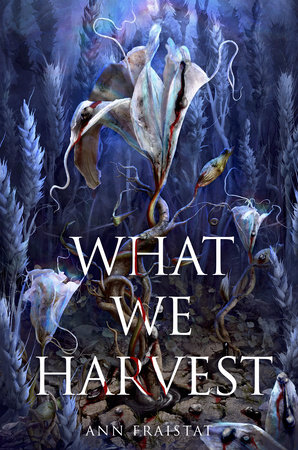
“What We Harvest” Book Review

Title: What We Harvest

Author: Ann Fraistat

Publication Year: 2022

Summary: Wren is a teenage girl in an idyllic town, which has become a disaster zone because of a mysterious Blight that has spread among its supernaturally unique farms. The Blight behaves curiously like quicksilver, but turns its victims into vicious, rotting creatures. She’s desperately trying to save everything and everyone she’s ever known and loved, but how?

What I Liked:

  • This book had nothing extraneous in it. Every single detail came back around into importance, and all the loose ends were tied up by the conclusion. Not a single word was out of place. It was expertly plotted and I am very impressed.
  • The central romance! It was straight, but it was really sweet. It didn’t feel like other romances that are contrived or fundamentally incompatible. You can tell that the characters really care about each other because they prove it through their actions. Side note: there IS another, gayer relationship in the book that I also really liked.
  • It dealt with the themes of climate change and white supremacy without ever explicitly mentioning either of those things AND without creating an allegory that was too heavy-handed. I felt the handling of the themes was masterfully done!
  • It was definitely YA horror, but it was not nihilistic and therefore a very enjoyable read. The romance and Wren’s ceaseless work towards ending the Blight both provided a much-needed measure of hope amid the horror.
  • It’s not a series! I love speculative fiction but I am so over waiting for the next book to come out and forgetting all the details in the process. This title wraps up completely at the end, which was refreshing!
  • The exposition was handled deftly. Because the book starts in the middle of the action, readers have to rely on flashbacks to understand the plot and also the central romance. However, these flashbacks were sprinkled in delicately and with discernment.
  • Claudette! I don’t want to spoil anything, but she was my favorite character.
  • The cover is absolutely gorgeous.

What I Didn’t Like:

  • The pacing made sense, as the book takes place in a disaster zone within two days, but it was really ceaseless in its intensity. This is not a good choice for bedtime reading. If you don’t mind that, then you should definitely pick up this book.
  • I found the ending to be a little rushed and confusing, but maybe I was just so on-the-edge-of-my-seat that I was the one rushing.

Star Rating: 4/5 STARS