How I Take Care of Myself Every Day (Mental Illness Self-Care for Cheap)

Here are the ways I take care of myself and work to reduce my stress every day, as someone who is in recovery with several mental illness diagnoses. Unlike many self-care ideas, most of these are completely free and the rest are cheap.

Note: This post is heavily “YMMV” (Your Mileage May Vary). Please continue to do the self-care that works for you— these are just some ideas if you’re struggling and don’t know where to start.

Wake up with time to spare.

I wake up at least two hours before I am scheduled to be anywhere. I drink coffee leisurely for at least an hour while texting friends and scrolling social media, and then do the rest of my morning tasks, like eating (see below), taking my pills (also see below), and getting dressed. I try to perform most of these tasks in the quiet of my bedroom, which has a couch to hang out on so I am not tempted to go back to sleep. The ritualized nature of my morning routine helps me immensely because:

  • The tasty coffee gives me something to look forward to when I get out of bed.
  • I do not feel rushed, frazzled, or stressed in the process of getting where I need to be.
  • I have a basic need for routine and to know in general what my day will look like when I start it, so having a morning ritual brings me a sense of comfort.

$: Coffee costs money. Alarms that help you get up on time might have a subscription fee. (I used to use one that wouldn’t stop playing the alarm unless you took a certain picture with your phone camera. Mine was set to the top of my coffee machine, so I had to get out of bed and make it to the kitchen before the alarm would shut off, but then I was all set to make my morning cup of coffee!)

Take your pills on time.

When you don’t take your pills on time, you don’t get the benefits your medications are supposed to give you— and you also invite some pretty shitty withdrawal symptoms. The severity depends on which medication you are on and how long you go without taking them, but it’s definitely noticeable. Last weekend I procrastinated getting out of bed and ended up taking my medications three hours late. I didn’t expect in that moment to spend the next eight hours back in bed with withdrawal symptoms. And to think— I used to procrastinate on taking my pills and do this to myself all the time!

$: Meds may cost money, but taking them on time does not. Set an alarm if you need to!

Go to work.

This sounds like a weird one. Going to work is self care? Yes! When the alternative is freelancing, which was terrible for my mental health, having a regular job at a regular workplace with mostly regular hours has done wonders for my stress.

Note: Not everyone is capable of working a traditional job, or at all. I am merely writing about what works for me. Absolutely no shame if your situation is different!

For me, this involves:

Getting dressed.

Leaving the house.

Taking a walk.

I walk 15 minutes to work and back on most days. (Sometimes I get a ride if the weather is awful.) If you get bored walking but you know you need the exercise, try downloading Pokemon Go. $: Free.

Socializing.

I am lucky to have a really good work environment, and my coworkers are my friends.

NOT constantly self-motivating.

When I freelanced from home, everything was up to me. I had to find my own clients on a regular basis as well as motivate myself to start and finish tasks. This resulted in me never getting anything done, losing promising clients, and having no money to take care of myself with.

Working in a more traditional workplace removes much of that stress. I show up, do my job, and then go home. I don’t think about it much when I’m not there. There’s also an element of body doubling with my coworkers that helps me a lot.

Making enough money that I don’t have to spend every second in a state of dread over my finances.

I now have enough money to pay rent and bills and also order Grubhub every once in a while, which is really all I need to survive (besides health insurance).

Write a little blurb about how you’re feeling.

This is how I do symptom tracking, because rating my mental health on a numerical scale doesn’t work for me.

I find that this helps me feel more in control of my life because not only am I noticing patterns that may emerge in my moods, I am tracking my long-term recovery progress.

If you’d like to know exactly what I track, check out this blog post.

$: This tip is not completely free, as I pay about $4 a month for the app I use.

Eat both protein and carbs.

Maybe you don’t struggle with eating enough calories like I do. Often, I will eat three carrots or a handful of raspberries and wonder why I’m hungry (and quickly wilting) half an hour later. Protein and carbs help you feel full longer and give you the calories your brain needs to work. Not every SINGLE meal or snack has to have both, but it’s proven to be a good thing for me to strive towards.

$: Obviously, food costs money, but peanut butter sandwiches are pretty cheap.

Get a good night’s sleep.

I won’t pretend to be an expert on sleep hygiene— I am aided at night by an antidepressant that makes me sleep super well. If you’re not getting the rest you need, I recommend having a sleep study done if that is available to you.

$: Depends on how you relax best before bed. Experiment!
The Three Types of Abuse

Abuse survivors and the professionals that work with them split up abusive behavior into emotional, physical, and sexual abuse. Emotional abuse is generally regarded, though not necessarily consciously, as the least harmful, and physical abuse is usually seen as the worst. Many survivors, when seeking to downplay their trauma to cope, will say to themselves and others, “At least he didn’t hit me.” But does it matter? These three types of abuse overlap much more than people tend to understand or appreciate, and that has important ramifications for recovery and self-awareness.

Here’s an example. (Skip to the next paragraph if you don’t want to read a detailed description of abusive behavior.) My abusive ex used to hold me down despite my many, very specific verbal protests, and pluck out any body hairs I had that he didn’t like. (He was grossed out by the hair growing out of a small mole on my arm or the occasional dark chin hair.) It happened in public at least once, in the midst of friends, and made me cry in shame. What type of abuse was this? It was emotional abuse because it undermined my self-esteem and sense of autonomy. It was sexual abuse because it focused on his control of my sexual appeal and the expression of my gender identity. It was physical abuse because he was holding me down and rendering me powerless. Through this example, we can see that the lines are not so clear as we may have thought.

What about all the times I was coerced into sex? (I don’t have a specific example here, because it happened so often and in so many subtly different ways.) What kind of abuse was that? It was sexual in nature, of course, and emotionally damaging, but I would argue that since it involved bodily violation, it was physical abuse too.

Sexual abuse is not given its due as a type of physical abuse. Sexual assault is experienced as physical violence, even if it’s a result of emotional coercion. It’s a danger experienced viscerally by the body and the nervous system. It is a literal, physical violation. Physical abuse is not just raising fists with the intent to harm– it’s also about damaging someone’s sense of autonomy and agency. Sexual assault, whether the survivor is overpowered or coerced, teaches someone through intimidation that their body is not under their own control, and that’s one of the scariest experiences a human can have.

It seems to me that bruises and broken bones are easier for the public to digest as traumatizing experiences. When people hear about sexual assault, they often think, “What’s the big deal?” Sex is generally fun and harmless, right? They don’t necessarily realize that sex, which is inescapably intimate and vulnerable, can leave our bodies feeling the exact same way as other types of physical abuse.

Thoughts on Psychodynamic Therapy

I started therapy again recently.

Therapy has never done much for me, to be completely honest. I have made a lot of progress in my seven years of recovery, but it has mainly been from a combination of medication, the support and insight of other mentally ill people, and my own damned hard work. Breakthroughs, which have always been pretty rare, seemed to happen at the kitchen table or alone in my room, not with a therapist. In fact, many of my therapists have been outright disappointing and incompetent, and I spent a lot of time teaching them about their own area of expertise. I had, for a long while, accepted that therapy was not for me.

This therapist, on the other hand, is BUILT DIFFERENT. Every single week I come away with new insight that improves my life. It’s not easy going— and I spend the majority of the sessions choked up or outright crying— but it’s finally effective.

My new therapist does psychodynamic therapy, which is not a popular type of therapy. It’s based heavily on the ideas of Freud, who until recently I considered a quack. I cannot provide a thorough definition of psychodynamic therapy as I have only just begun it, but here are some bullet points from my research:

  • Psychodynamic therapy comes from Freudian psychoanalysis, but it has been continually updated and evolved since his lifetime.
  • Psychoanalysis was super intense and often involved five days a week of therapy. Psychodynamic therapy involves much less of a weekly time commitment.
  • Unlike psychoanalysis, which necessitated the stereotypical couch, psychodynamic therapy just needs two chairs for the participants. This change reflects the newer therapy’s more equal balance of power.
  • Much of the focus is on the relationship between the client and the therapist, which is seen as a reflection of other relationships.
  • It deals with repressed emotions and the subconscious, as well as psychological defenses that help us avoid unpleasant feelings and experiences.
  • Rather than focusing on quick skills that target symptoms (like CBT or DBT), this form of therapy tries to make deep, lasting changes.
  • Like many therapies, an emphasis is placed on childhood experiences and how they have shaped the client’s life.
  • Dream analysis may be used.

I don’t know if my therapist is so great because of the psychodynamic framework, or if he’s just really good at his profession. It’s probably a combination of both. He goes above and beyond when it comes to learning and perfecting his craft, and it has paid off in improvements to MY life.

If you have done psychodynamic therapy and you want to let me know how it went for you, you can comment or email me at joelsherwoodblogger@gmail.com !

The No-Cleanse Lifestyle

Unlike other witches, I don’t DO cleansing.

Sometimes, there are exceptions. If something has “bad energy” surrounding it (like things that I love but were given to me by an ex-partner), I will cleanse it. If my tarot deck is giving me weird repeats, I take note of their message (then make a Facebook post about it), and then I give them a gentle cleanse. Occasionally you need to press the restart button without wiping your hard drive.

To me, my witchcraft tools (and other things, including myself) are like a trusty cast iron pan. They’re seasoned with energy, and I don’t want to strip that away. I don’t want to cleanse my 130-year-old rented house of its spirits. I don’t want to cleanse my crystals of the things they learned in the earth. I especially don’t want to cleanse myself of the energy I exude, the way I fill the air because I’m never quiet.

Some would say I’m a hoarder. I was raised that way. My father, when I was very young, built a barn in his backyard, the residents of which were cars without engines, every dish my mother had inherited, and all the books my brother and I outgrew. I have watched him pick through the trash to rescue a months-old, torn-up magazine that my brother discarded. I think it started during his brush with homelessness, but I also think it’s in my genetics to never get rid of anything. Every marble feels like an ancient artifact, if you look at it the right way. Every notebook is an old friend. Every coin you find is buried treasure. Everyone in my family is like this.

I’m the same way when it comes to memories, too. If someone offered me a miraculous chance to forget about the traumas that gave me PTSD, I wouldn’t take it. Some would say I’m holding grudges, but in reality, I am lovingly holding all the parts of me– even those that bring me pain– just for being a part of me. I need to learn to deal with the memories, work WITH what my energetic body has picked up, and never shy away from the truth of what humans can do.

Some people cleanse all the time, every day. They cleanse their crystals in the light of the full moon, they sage their auras, they purge their homes.

That’s not me.

I will never be pure.

Gentle cleansing ideas:

-put selenite on top of it for a few hours

-wave it over the flame of a light-colored candle

-place it in front of the mirror while you take a shower

-cup it in your hand and whisper to it through your fingers

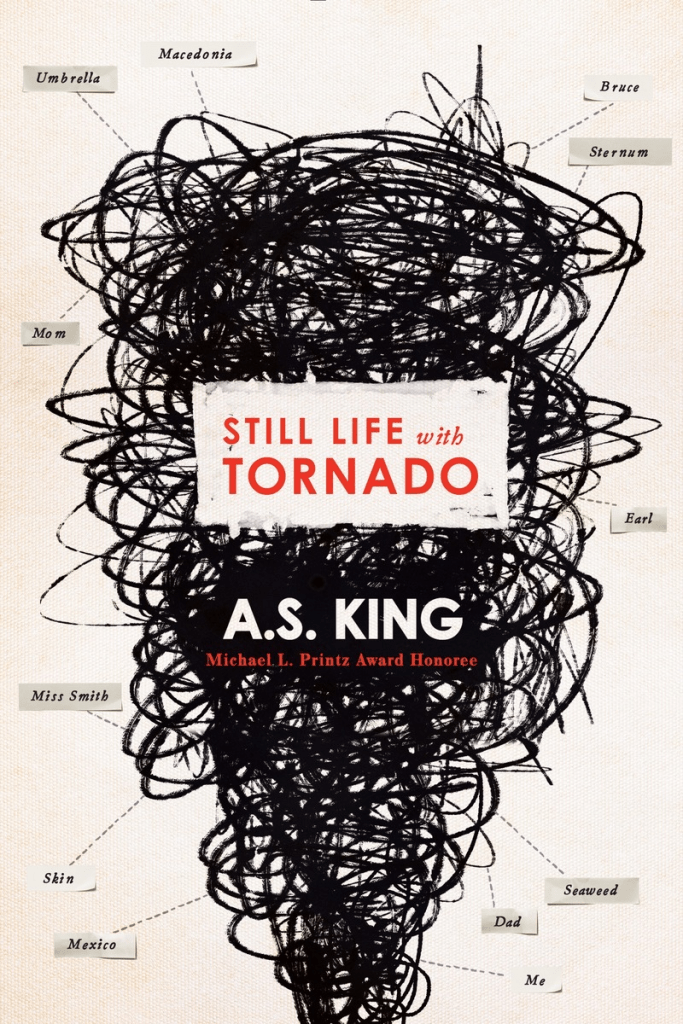
Review: Still Life With Tornado by A.S. King

“I tell the truth slowly. I think that’s how the truth shows up sometimes.”

For much of this book, we don’t know what’s wrong with the main character Sarah. That’s because Sarah can’t even bear to think about it herself. After all, she tells the truth slowly, but she gets there. This is the main source of tension and intrigue for the reader. Not a lot happens in this book except for the character’s internal shifts and the artistry in how they are conveyed to the reader. If that sounds boring, then this is not the book for you. If you can appreciate introspection in your fiction, however, this is a masterpiece of YA.

I connected wholeheartedly with this book, and found exceptional catharsis in it, despite how different the facts of 16-year-old Sarah’s life are from mine. For one thing, she is an artist and I am a writer. She is cisgender and I am transgender. She doesn’t go to school for weeks at a time and my high school attendance was exemplary. However, the overall atmosphere of the book conveyed the exact feelings I had as a teenager with a dissociative disorder, previously known as multiple personalities. In Still Life With Tornado, her dissociation has a magical but poignant twist in that other people can see her other selves as separate, very real, people. When she first meets her other selves (at ages 10, 23, and 40) she is startled and confused, but gradually she and the people around her come to see them as allies. This is the exact trajectory of healing from trauma with a dissociative disorder, and A.S. King has portrayed her version with immense empathy and care. What may have initially seemed to be an unconventional literary device leaves readers stinging with the truth.

Note: Big TW for physical and emotional abuse.

Motivation Hack

Last week I decided to discuss motivation issues with my therapist again, which had previously gone poorly after he said that nobody does anything they don’t want to do, which confused and irritated me. Then I figured out he was re-framing things and also telling the truth.

Even when I have mixed feelings on something and would RATHER rot in bed, I’m doing it because there is some reason I WANT to do it.

For example, I do dishes because I WANT to help out the other people in my house. I go to work because I WANT to live independently.

This re-framing helped me hugely. Whenever I felt that internal resistance that says “lay in bed forever and starve,” I would say to myself “I WANT to take a shower because I want to be clean. I would even include fun stuff like “I WANT to make tea because it’s warm.”

I was really happy with this for like three days, but unfortunately the magic has started to wear off, so I have now switched to “I’m CHOOSING to do … because …” and it feels almost as good and is maybe a little more validating of my ambivalence.

I hope this helps someone else!

Lying to Others vs Lying to Yourself

Something paraphrased from a book I’m reading (Lies We Tell Ourselves by Jon Frederickson), mixed with my own thoughts:

You can always lie to other people. There are many completely valid reasons to do so. Maybe you’re trying to be diplomatic, or you’re just not ready to tell the truth. Yes, it can cause interpersonal issues and it’s not usually the best choice morally either, but the option is always there in an emergency.

However, what REALLY creates problems in your psyche and messes you up is LYING TO YOURSELF. If you get in this habit (and most of us do) you can lose touch with yourself and your needs entirely. It’s impossible to be authentic to yourself and to other people when you don’t even know what your inner truth really is. Being yourself is so important because it’s who you are neurologically, psychologically, and socially wired to be. Basically, it’s impossible to be happy and functional if you’re denying your own reality and gaslighting yourself.

I’ve noticed that when I think I don’t know how I’m feeling or what’s “wrong” with me, I’m usually lying to myself about knowing the answer. Maybe I’m hungry even though I just ate two hours ago, so I feel like I “shouldn’t” be. Maybe I’m missing someone who I know is kind of awful. Instead of being in denial about how I feel, I’ve been working on being honest with myself. If you catch yourself in a lie to yourself, remember to be gentle and curious when you’re investigating and sussing out the truth.

Also, remember that you don’t have to act on every whim, even when you’re admitting them to yourself. You don’t HAVE to text your ex just because you want to. You don’t HAVE to eat M&Ms until you throw up. Just admit to yourself that you want to and see if some problem-solving is in order. (Can you text your best friend instead? Can you have just a handful of candy? What is the smart choice, knowing what you know about what you really want?)

Put on a fake smile if you need to, but don’t mistake that for true happiness.

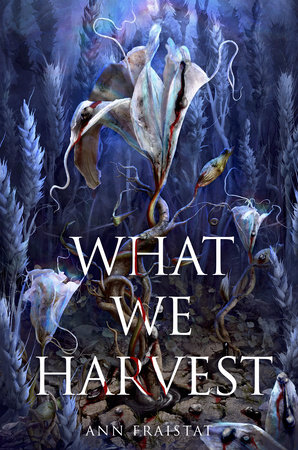
“What We Harvest” Book Review

Title: What We Harvest

Author: Ann Fraistat

Publication Year: 2022

Summary: Wren is a teenage girl in an idyllic town, which has become a disaster zone because of a mysterious Blight that has spread among its supernaturally unique farms. The Blight behaves curiously like quicksilver, but turns its victims into vicious, rotting creatures. She’s desperately trying to save everything and everyone she’s ever known and loved, but how?

What I Liked:

  • This book had nothing extraneous in it. Every single detail came back around into importance, and all the loose ends were tied up by the conclusion. Not a single word was out of place. It was expertly plotted and I am very impressed.
  • The central romance! It was straight, but it was really sweet. It didn’t feel like other romances that are contrived or fundamentally incompatible. You can tell that the characters really care about each other because they prove it through their actions. Side note: there IS another, gayer relationship in the book that I also really liked.
  • It dealt with the themes of climate change and white supremacy without ever explicitly mentioning either of those things AND without creating an allegory that was too heavy-handed. I felt the handling of the themes was masterfully done!
  • It was definitely YA horror, but it was not nihilistic and therefore a very enjoyable read. The romance and Wren’s ceaseless work towards ending the Blight both provided a much-needed measure of hope amid the horror.
  • It’s not a series! I love speculative fiction but I am so over waiting for the next book to come out and forgetting all the details in the process. This title wraps up completely at the end, which was refreshing!
  • The exposition was handled deftly. Because the book starts in the middle of the action, readers have to rely on flashbacks to understand the plot and also the central romance. However, these flashbacks were sprinkled in delicately and with discernment.
  • Claudette! I don’t want to spoil anything, but she was my favorite character.
  • The cover is absolutely gorgeous.

What I Didn’t Like:

  • The pacing made sense, as the book takes place in a disaster zone within two days, but it was really ceaseless in its intensity. This is not a good choice for bedtime reading. If you don’t mind that, then you should definitely pick up this book.
  • I found the ending to be a little rushed and confusing, but maybe I was just so on-the-edge-of-my-seat that I was the one rushing.

Star Rating: 4/5 STARS

What To Buy To Help Your Mental Health

There is only one thing you need to buy to improve your mental health: a notebook.

Get something that meets your needs, but isn’t so precious that you will never write in it. My personal preference is the dot-grid journals from Michael’s, which are pretty cheap, but you may find that a large spiral notebook or a sketchbook meets your needs better. It honestly doesn’t really matter.

Actually, you don’t even need to buy a notebook if you would feel more comfortable using something digital, like a notes app or a word processor. It’s up to you— just make sure you get ahold of something you can organize easily and that you will actually use regularly.

(I have experimented with both analog and digital mental health journals and am currently using both in slightly different ways!)

Here’s the key: write with purpose. Instead of a journal where you might vent for catharsis or just record the happenings of the day, zoom in on your mental health.

Here are some ideas for your mental health notebook:

  • Conduct mental health experiments and write about them. This might be my most important tip. For example, try drinking less coffee for a month and devote a page to tracking how you feel. Change up your exercise routine and write about how it affects your mental state.
  • Write scripts where you use CBT or DBT skills.
  • Take notes during therapy so you can remember what you talked about and any conclusions you came to.
  • Include your therapy homework and what you learned.
  • Track the severity of your symptoms over time. Include notes about life circumstances that may have played a part.
  • Write down mental health goals (make sure they are measurable!) and track your progress.
  • Print out and paste in mental health resources you may find on the internet, like a feelings wheel.
  • Record and fine-tune self-care routines, like an exercise plan or what to do while drinking your morning coffee to help you have a good day.
  • Include a regularly-updated list of things you love about yourself.
  • Write down quotes that motivate you! Don’t go bonkers with this— sometimes fewer is better, to ensure focus. My favorite quote to focus on is “I’m doing my best and I can do better!”
  • Track your triggers. Write down any extreme emotions you have and what caused them. You might also make a list of triggers that you already know about, maybe with a plan for avoiding them.
  • Track changes in any medication you might take and how you feel before and after.
  • Write a WRAP or a safety plan for crises. If you decide to make this part of your notebook and not a separate document, remember to keep your notebook somewhere accessible and clearly mark your WRAP/safety plan (maybe with those little sticky flags?)
  • Experiment with gratitude lists.
  • Conduct weekly or monthly reviews to help you troubleshoot.
  • Include a list of values or priorities to refer to when you make decisions.
  • Record the names of your favorite meditations (whether you’re using YouTube or an app) so that you can come back to them.
  • Check off days that you forget your medication and write about what happened.
  • Write down journal prompts that focus on mental health and then answer them.

Got any more ideas? Please leave them in the comments so others can benefit too!

The Points System for Motivation

I am always trying to hack my own brain and figure out how to motivate myself to accomplish tasks when I would rather be decomposing in bed, so I recently instated a points system. Each “productive” activity (which is, admittedly, kind of a subjective category) gets a value of 1-5 points based on how many spoons/how much effort they take. For example, laundry is 3 points, a doctor’s visit is 4 points, and brushing my teeth is 1 point. My current goal is 5 points per day, but I plan on gradually increasing that goal as I build mastery. So far, it’s going really well!

I also instated a reward, which is kind of a contentious subject for me. (I think many rewards are stuff like food/treats/rest/relaxation, which we should be giving to ourselves anyway.) My reward for hitting 5 points is being able to open a particular mobile game that is my current special interest. If I don’t hit 5 points, or haven’t yet, I am still allowed to play other video games or watch TV or lay in bed if I need to chill, but playing this game is only for after I hit 5 points. This reward is motivating enough to make me want to accomplish things, without preventing me from doing the things that help me recharge over the course of the day.

This system has the advantage of being flexible. For example, yesterday I started out with a plan to do laundry, but I really didn’t feel like it, so I did other activities that equaled the same amount of points. Instead of feeling guilty that I didn’t do what I planned to do, I just accepted that I earned my 5 points and moved on to playing Hearthstone.

Not only is it helping me get things done in a flexible way, the points system is helping me REST. Once I hit the relatively achievable/slightly challenging 5 points goal, I can do whatever I want without feeling guilty. It’s absolutely amazing to not sit around just thinking of all the productive stuff I could be doing and hating myself for not being able to do it.

In the words of Marsha Linehan, “I am doing my best and I can do better!”

If you would like to formulate your own similar points system, all you really need is a notes app or a piece of paper for keeping track of how many points an activity is worth, and then a way of keeping track of your tasks.